Build payments that post to the ledger
Take a payment in your product and post it to the practice ledger, so the front desk never reconciles by hand.

Take a payment in your product and post it to the practice ledger, so the front desk never reconciles by hand.
Collect in your product. Post to the system of record.
Payments and adjustments land on the patient ledger, linked to the right charges and providers.
Read patient, guarantor and insurance balances and fee schedules.
Coverage verification and plan details for the patient on file.
Procedures with fees, so you can itemize before you collect.
Know when a charge, payment or insurance record changes.
The same payments endpoints work on all 15+ systems, so one integration covers every practice you serve.
Your product writes into the system the practice already runs on. Nothing to reconcile.
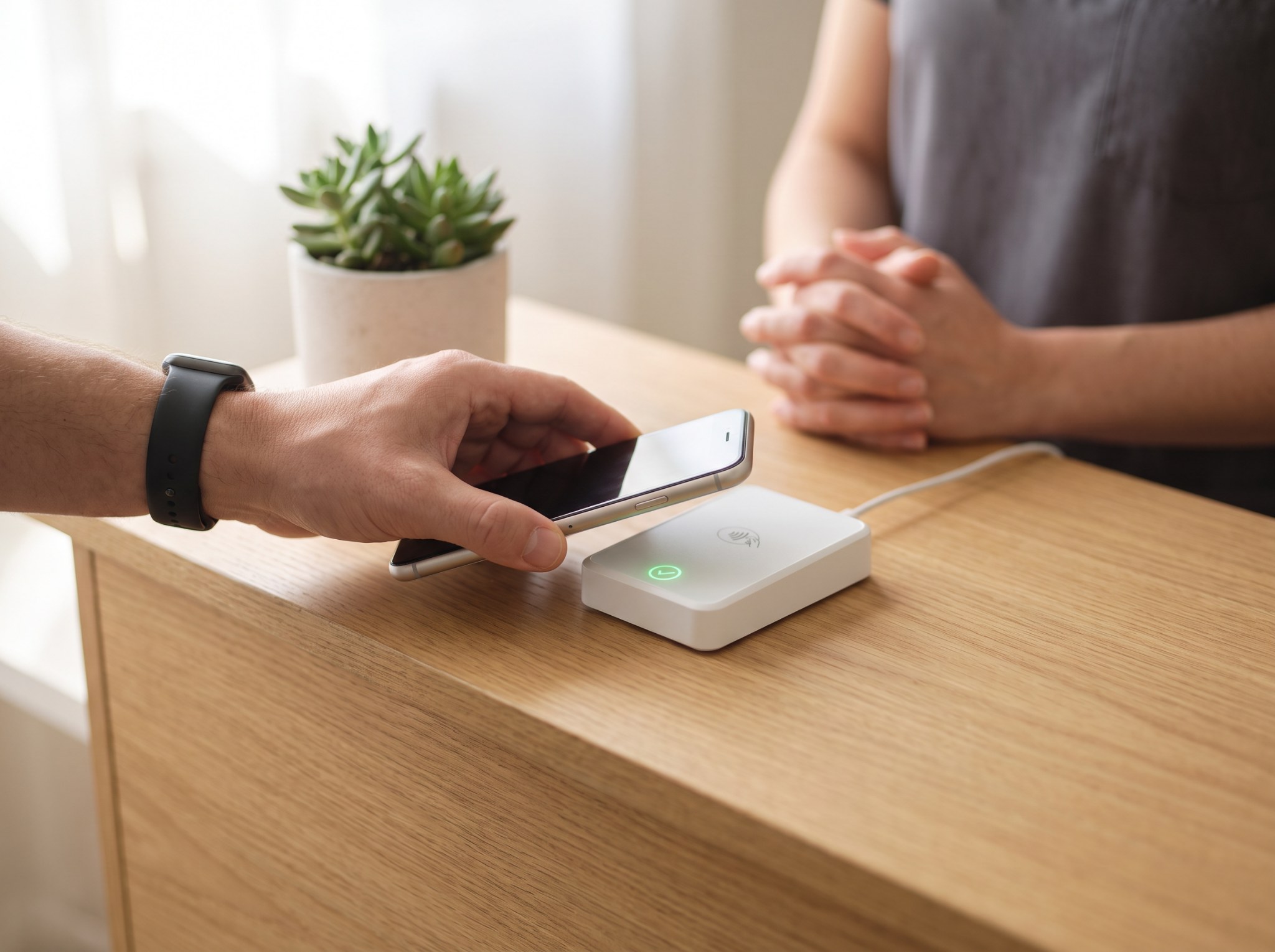
A payment taken in your app lands on the patient’s ledger in the practice system, usually within seconds, linked to the charge and the provider, with a notice at the desk.
See the payment callPayments posted straight to the practice ledger, and 2 engineers back on the product.
DearDoc freed up 2 engineers by moving its practice integrations to Synchronizer.
Built with
Payments
Patients
Insurance
Webhooks

Read what is owed, then post what was paid.
// Read what the patient owes
const patient = await fetch(
  'https://nexhealth.info/patients/55476535?' +
  'subdomain=your-practice&location_id=100', {
  headers: {
    'Authorization': 'Bearer YOUR_TOKEN',
    'Nex-Api-Version': 'v3.0.0'
  }
});
const { data: { balance_amount } } = await patient.json();

// Post the payment to the ledger
const payment = await fetch(
  'https://nexhealth.info/payments?' +
  'subdomain=your-practice&location_id=100', {
    method: 'POST',
    headers: {
      'Authorization': 'Bearer YOUR_TOKEN',
      'Nex-Api-Version': 'v3.0.0',
      'Content-Type': 'application/json'
    },
    body: JSON.stringify({
      payment: {
        patient_id: 55476535,
        amount: -138.00,            // negative reduces the balance
        transaction_id: 'API:482113',
        payment_type_id: 10,
        paid_at: '2026-11-20T21:00:00+00:00',
        notes: 'Text-to-pay, invoice 4821'
      }
    })
  }
);

// 202 Accepted. The write-back is queued and confirmed by webhook.// Post the payment to the ledger
const payment = await fetch(
  'https://nexhealth.info' +
  '/payments?subdomain=' +
  'your-practice&location_id=100',
  { method: 'POST',
    headers: {
      'Authorization':
        `Bearer ${token}`,
      'Nex-Api-Version': 'v3.0.0',
      'Content-Type':
        'application/json'
    },
    body: JSON.stringify({
      payment: {
        patient_id: 55476535,
        amount: -138.00,
        transaction_id:
          'API:482113',
        payment_type_id: 10,
        paid_at:
        '2026-11-20T21:00:00+00:00',
        notes: 'Text-to-pay'
      } }) });

// 202 Accepted. Confirmed
// by webhook once it lands.# Read what the patient owes
patient = requests.get(
    'https://nexhealth.info/patients/55476535',
    params={'subdomain': 'your-practice', 'location_id': 100},
    headers={
        'Authorization': 'Bearer YOUR_TOKEN',
        'Nex-Api-Version': 'v3.0.0'
    }
)
balance_amount = patient.json()['data']['balance_amount']

# Post the payment to the ledger
payment = requests.post(
    'https://nexhealth.info/payments',
    params={'subdomain': 'your-practice', 'location_id': 100},
    headers={
        'Authorization': 'Bearer YOUR_TOKEN',
        'Nex-Api-Version': 'v3.0.0'
    },
    json={
        'payment': {
            'patient_id': 55476535,
            'amount': -138.00,            # negative reduces the balance
            'transaction_id': 'API:482113',
            'payment_type_id': 10,
            'paid_at': '2026-11-20T21:00:00+00:00',
            'notes': 'Text-to-pay, invoice 4821'
        }
    }
)

# 202 Accepted. The write-back is queued and confirmed by webhook.# Read what the patient owes
patient = requests.get(
  'https://nexhealth.info'
  '/patients/55476535',
  params={
    'subdomain': 'your-practice',
    'location_id': 100},
  headers={'Authorization':
    'Bearer YOUR_TOKEN',
    'Nex-Api-Version': 'v3.0.0'})
balance = (patient.json()
  ['data']['balance_amount'])

# Post the payment to the ledger
payment = requests.post(
  'https://nexhealth.info/payments',
  params={
    'subdomain': 'your-practice',
    'location_id': 100},
  headers={'Authorization':
    'Bearer YOUR_TOKEN',
    'Nex-Api-Version': 'v3.0.0'},
  json={'payment': {
    'patient_id': 55476535,
    'amount': -138.00,  # reduces
    'transaction_id': 'API:482113',
    'payment_type_id': 10,
    'paid_at':
      '2026-11-20T21:00:00+00:00',
    'notes':
      'Text-to-pay, invoice 4821'}})

# 202 Accepted. Write-back queued,
# confirmed by webhook.# Read what the patient owes
curl 'https://nexhealth.info/patients/55476535?subdomain=your-practice&location_id=100' \
  -H 'Authorization: Bearer YOUR_TOKEN' \
  -H 'Nex-Api-Version: v3.0.0'
# { "data": { "id": 55476535, "balance_amount": 138.00, ... } }

# Post the payment to the ledger
curl -X POST \
  'https://nexhealth.info/payments?subdomain=your-practice&location_id=100' \
  -H 'Authorization: Bearer YOUR_TOKEN' \
  -H 'Nex-Api-Version: v3.0.0' \
  -H 'Content-Type: application/json' \
  -d '{
    "payment": {
      "patient_id": 55476535,
      "amount": -138.00,
      "transaction_id": "API:482113",
      "payment_type_id": 10,
      "paid_at": "2026-11-20T21:00:00+00:00",
      "notes": "Text-to-pay, invoice 4821"
    }
  }'

# 202 Accepted. The write-back is queued and confirmed by webhook.# Read what the patient owes
API=https://nexhealth.info
TOKEN=YOUR_TOKEN
curl -G $API/patients/55476535 \
  -d subdomain=your-practice \
  -d location_id=100 \
  -H 'Nex-Api-Version: v3.0.0' \
  -H "Authorization: Bearer $TOKEN"
# { "data": { "balance_amount":
#   138.00, ... } }

# Post the payment to the ledger
Q='subdomain=your-practice'
Q="$Q&location_id=100"
curl -X POST "$API/payments?$Q" \
  -H 'Nex-Api-Version: v3.0.0' \
  -H Content-Type:application/json \
  -d '{ "payment": {
    "patient_id": 55476535,
    "amount": -138.00,
    "transaction_id": "API:482113",
    "payment_type_id": 10,
    "paid_at":
      "2026-11-20T21:00:00+00:00",
    "notes":
      "Text-to-pay, invoice 4821"
  } }' \
  -H "Authorization: Bearer $TOKEN"

# 202 Accepted. Write-back queued,
# confirmed by webhook.
Yes. You can verify coverage, read insurance, patient and guarantor balances and fee schedules, and post payments and adjustments to the ledger.
Yes. Post a payment or an adjustment and Synchronizer writes it to the practice’s own ledger, then confirms it with a webhook when it lands. Balances and aging update on the next read, so the front desk never reconciles by hand.
$0.10 per API call and $0.05 per webhook delivery. The sandbox is free, and there are no setup fees and no monthly minimums. Higher volumes get custom pricing on the Scale plan.
NexHealth is HIPAA compliant and SOC 2 Type I certified. Data is encrypted in transit and at rest and stored in US AWS. A Business Associate Agreement with NexHealth is part of the developer portal license, at no extra cost, and we’ll send a countersigned copy on request. You still need your own BAA with each practice you serve. Security documents are in our trust center.
15+ practice systems, one integration.